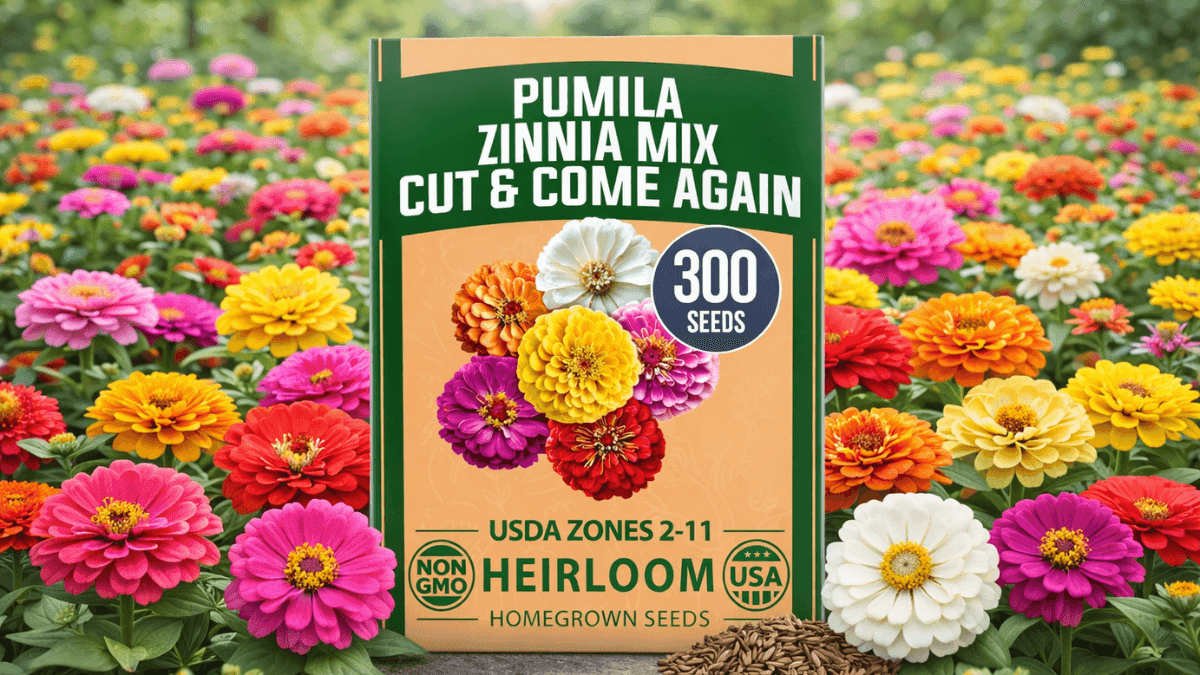
A flower bed without color feels like a party without music. That’s where HOME GROWN Dwarf Zinnia Seeds Mix steps in. These compact, vibrant blooms deliver reliable summer color without taking over your space. If you want flowers that grow quickly, handle heat, and keep blooming for months, this mix checks the right boxes.
You get a blend of red, pink, orange, yellow, lavender, and white blooms in a tidy 18–24 inch height. That size works well in raised beds, small yards, or patio containers. Even better, these zinnias start flowering about 60–70 days after sowing. According to the National Garden Bureau, zinnias rank among the easiest annual flowers to grow in North America, especially in full sun conditions.
Here’s how this mix performs and what you can expect in your garden.
HOME GROWN Dwarf Zinnia Seeds Mix: What You’re Getting
This mix features Zinnia elegans (Pumila variety), a compact annual flower bred for dense growth and repeat blooms. The plants grow to about 18–24 inches tall and stay fairly uniform, which keeps beds looking neat.
Key features:
- Multicolor blend for layered visual interest
- Compact growth habit
- Cut-and-come-again performance
- Heat tolerant during peak summer
- Suitable for USDA Zones 2–11
The 300-seed packet on Amazon typically ranges from $8 to $18, depending on the seller and season. Larger packs are also available:
- 700 seeds: around $12–$25+
- 8,525+ seeds (bulk): around $20–$40+
- 17,000+ seeds (large bulk): around $30–$60+
Prices shift based on supply and timing, so it helps to check current listings.
Bloom Time and Seasonal Performance
You can expect first blooms in about two months after planting. Once flowering begins, it continues through summer and into early fall. In hot climates, these plants often perform better than many other annual flower seeds for summer gardens.
University extension programs, including Texas A&M AgriLife Extension, frequently recommend zinnias for heat tolerance and reliable bloom cycles. In real garden trials, zinnias consistently rank high for summer durability.
If you plant in late spring after frost risk passes, you’ll enjoy a steady display during the warmest part of the year. Regular deadheading encourages more flowers and keeps plants looking clean.
Growing Requirements: Simple and Straightforward
One reason gardeners gravitate toward dwarf zinnia seeds mix varieties is how easy they are to grow.
Sunlight
Plant in full sun. Six to eight hours of direct sunlight daily supports strong stems and abundant blooms.
Soil
Average, well-drained garden soil works fine. You do not need heavily amended beds. If drainage is poor, raised beds or containers improve results.
Water
Keep soil lightly moist during germination. Once established, water moderately. Avoid soaking foliage to reduce fungal risk.
Spacing
Space plants 6–12 inches apart. Proper airflow lowers the chance of mildew and supports healthy growth.
If you are new to gardening, this mix offers quick wins. Germination tends to be fast in warm soil, which builds confidence early in the season.
Container Gardening and Small-Space Benefits
If yard space is limited, these compact zinnia plants thrive in containers. A 10–12 inch pot can support several plants with proper spacing.
Benefits for containers:
- Controlled soil drainage
- Easy repositioning for sunlight
- Ideal for balconies and patios
- Great for entryway color
In personal test plantings on a sunny patio in USDA Zone 7, this mix maintained steady blooms through high heat stretches above 90°F. Container plants required consistent watering but showed no major stress. That performance makes this mix practical for urban gardeners.
Pollinator-Friendly Flower Seeds That Support Local Ecosystems
Zinnias are well known as pollinator-friendly flower seeds. Their open blooms allow bees and butterflies easy access to nectar.
The Xerces Society for Invertebrate Conservation highlights zinnias as beneficial additions to pollinator gardens. By planting this mix, you help support local insect populations while adding strong color to your space.
If supporting biodiversity matters to you, adding even a small patch of zinnias can contribute to seasonal food sources for pollinators.
Maintenance Tips for Maximum Blooms
To keep flowers coming, focus on a few simple habits:
- Deadhead spent blooms regularly
- Avoid overhead watering late in the day
- Remove crowded stems if airflow decreases
- Apply a balanced fertilizer lightly if growth slows
Deadheading redirects energy toward new blooms instead of seed production. With consistent care, plants continue producing flowers through early fall.
Some gardeners prefer to let a few flowers mature at the end of the season to collect seeds. Others value nonstop blooms and remove faded flowers consistently. Both approaches work depending on your goal.
Cut Flowers for Summer Arrangements
This mix is labeled as cut-and-come-again, which means cutting stems actually encourages new blooms.
If you enjoy fresh bouquets, these zinnia seeds for cutting garden setups provide steady stems. Cut flowers in the morning when stems are firm. Place them in water immediately for longer vase life.
Many home gardeners report that zinnias last about a week in indoor arrangements with clean water changes. That makes them practical for weekly tabletop color.
Climate Adaptability Across the U.S.
These zinnias grow in USDA Zones 2–11, which covers most of the United States. In cooler northern climates, plant after final frost. In southern regions, sow after early spring warmth settles in.
In humid regions, powdery mildew can appear late in the season. Good spacing and airflow reduce that risk. In drier climates, consistent watering helps maintain steady bloom production.
Gardeners in high-heat states often choose heat tolerant annual flowers like zinnias because they hold up when temperatures rise.
Addressing Common Questions and Concerns
Do they require advanced gardening skills?
No. This mix suits beginners and experienced gardeners alike. Basic sun and watering needs make care manageable.
Are they invasive?
Zinnia elegans is an annual and does not spread aggressively.
Do they attract pests?
Like many flowers, they may attract aphids in some areas. A strong spray of water or mild insecticidal soap usually resolves minor issues.
Are bulk sizes worth it?
If planting large beds or community gardens, bulk packs reduce cost per seed. Smaller packets are practical for patio setups.
Multiple perspectives matter. Some gardeners prefer perennial flowers for long-term landscaping. Others value annuals for seasonal flexibility and vibrant color changes each year. Your choice depends on design goals and maintenance style.
Product Packaging and Storage
The 300-seed packet weighs about 0.63 oz (18 g) and measures roughly 5 x 3 x 0.25 inches. Storage is simple. Keep seeds in a cool, dry place until planting season.
For best germination rates, plant within the recommended timeframe on the packet. Seeds stored properly often remain viable for several seasons.
A Reliable Choice for Bright Summer Beds
If your garden needs steady color that handles summer heat, HOME GROWN Dwarf Zinnia Seeds Mix delivers dependable performance in a compact size. The plants grow quickly, bloom generously, and attract pollinators along the way. Maintenance stays simple, even if you are new to growing flowers from seed.
You get flexibility too. Plant them in beds, containers, or cutting gardens. Choose the packet size that fits your space and planting plans.
To explore current pricing and available seed sizes, take a look at the product listing on Amazon. While browsing, you may also find other seasonal seed options that fit your garden goals.