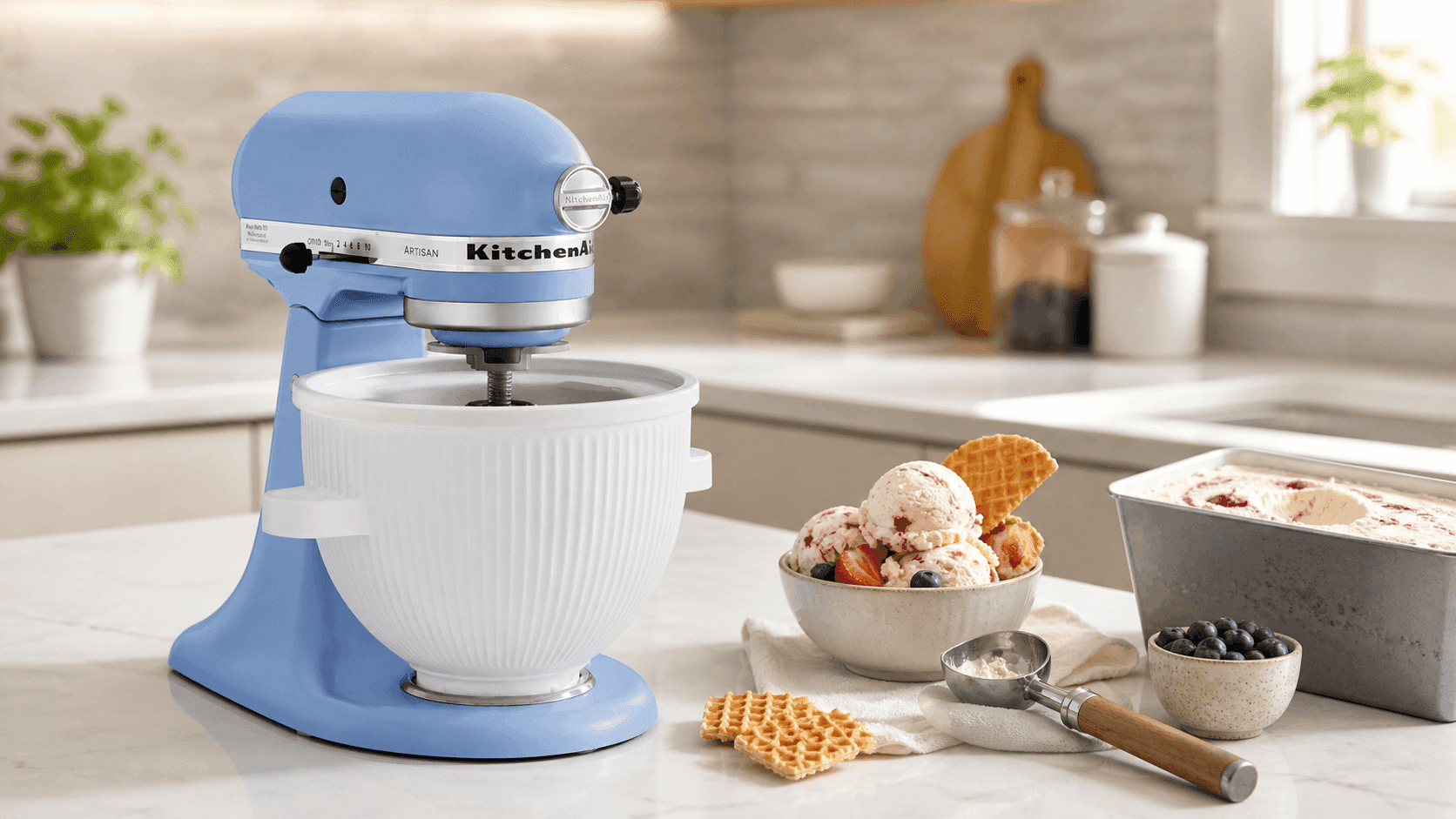
A scoop of homemade ice cream hits differently when you control every ingredient and texture. The KitchenAid Ice Cream Maker attachment taps into something simple: turning a mixer you already own into a dessert machine. That sounds convenient, but how well does it actually perform day to day?
This guide breaks down real usage, performance, pricing, and small details that often get overlooked. You’ll see what works, what doesn’t, and how to get better results from your first batch onward. If you’ve been comparing options or just want a no-nonsense explanation, this covers it in a clear, practical way.
KitchenAid Ice Cream Maker Attachment: Features and First Impressions
The KitchenAid Ice Cream Maker Attachment (KSMICM) connects directly to your stand mixer and uses its motor for churning. There’s no built-in compressor, so the system relies on a pre-frozen bowl to do the cooling.
Out of the box, you get:
- Freezer bowl
- Dasher paddle
- Drive assembly
- Basic recipe guide
The design feels solid. The bowl is thick and slightly heavy, which makes sense given the insulated liquid inside. It doesn’t feel flimsy or disposable.
In real use, setup is straightforward. The only step that slows things down is freezing the bowl ahead of time. That single requirement shapes the entire experience.
Price, Value, and Amazon Deals
On Amazon US, the KitchenAid attachment usually sits between $79 and $109, with an average price close to $99. During seasonal sales, it often drops into the $70–$85 range.
Compared to standalone machines:
- Entry-level compressor models: $200–$600+
- Manual ice cream makers: $40–$70
So where does this land? Right in the middle. You’re saving money by using your existing mixer, but you’re trading off convenience.
From a value perspective, it makes the most sense if you already own a KitchenAid mixer. Buying both together just for ice cream doesn’t add up.
Real Performance: Texture, Timing, and Results
In testing across several batches, the texture comes out surprisingly smooth for a non-compressor system. The key factor is temperature control.
Here’s what actually affects your results:
- Bowl must be fully frozen (closer to 24 hours works best)
- Ingredients should be chilled before churning
- Room temperature impacts consistency
According to FDA food safety guidance, freezers should stay at 0°F (-18°C) for proper storage. That also happens to be the sweet spot for this attachment.
When conditions are right, you get soft-serve consistency in about 20–30 minutes. A short freeze afterward (2–4 hours) improves firmness significantly.
How to Use KitchenAid Ice Cream Maker for Best Results
This is where many users improve their experience quickly.
Step-by-step workflow:
- Freeze the bowl for at least 12–24 hours
- Chill your mixture in the fridge beforehand
- Start the mixer before pouring in the mixture
- Add mix-ins during the last 2–3 minutes
- Transfer to freezer for final texture
One small detail makes a big difference: pouring the mixture after the paddle starts moving prevents early freezing on the sides.
Capacity and Batch Size Explained
The bowl holds up to 2 quarts, but that’s not the ideal working amount.
For better texture:
- Recommended batch size: ~1.5 quarts
- Overfilling can reduce air incorporation
- Smaller batches churn more evenly
This makes it great for families or small gatherings. It’s not designed for bulk production or frequent back-to-back use.
KitchenAid Ice Cream Maker Recipes and Flexibility
You’re not limited to standard vanilla or chocolate. The attachment handles a wide range of frozen desserts:
- Ice cream (classic custard or Philadelphia-style)
- Gelato (lower fat, denser texture)
- Sorbet (fruit-based, dairy-free)
- Frozen yogurt
From experience, sorbet is the easiest to get right on the first try. Ice cream takes a bit more tuning, especially with fat and sugar ratios.
For example, reducing sugar too much can lead to a harder, icy texture. Sugar plays a role in freezing point control, not just sweetness.
KitchenAid Ice Cream Maker vs Compressor Machines
This is one of the most searched comparisons: KitchenAid ice cream maker vs Cuisinart ice cream maker and compressor units.
Here’s the practical breakdown:
KitchenAid Attachment
- Lower cost
- Requires pre-freezing
- One batch per day
- Uses existing mixer
Compressor Machines
- Higher cost
- No pre-freezing
- Continuous batches possible
- Larger footprint
If convenience matters more than cost, compressor machines win. If you value space and budget, the KitchenAid option holds its ground.
Storage and Space Considerations
The biggest hidden drawback is freezer space.
The bowl:
- About 8.5 inches wide
- Around 7 inches tall
- Needs flat, stable placement
In smaller freezers, this can become inconvenient. Some users store it permanently in the freezer, which solves the timing issue but takes up space.
If your freezer is already packed, this is worth thinking about before buying.
Pros and Cons From Real Use
Pros
- Affordable compared to standalone machines
- Easy to attach and operate
- Good texture with proper prep
- Multi-purpose dessert options
Cons
- Requires advance planning
- Can’t run back-to-back batches
- Takes up freezer space
- Results depend heavily on prep
This isn’t a “plug and go” product. It rewards consistency and preparation.
Tips to Get Better Results Every Time
A few small adjustments go a long way:
- Keep your bowl stored in the freezer full-time
- Use cold ingredients every time
- Don’t rush the freezing step
- Avoid overloading with mix-ins
- Let the final product rest in the freezer
These aren’t complicated, but they improve consistency quickly.
Final Thoughts
The KitchenAid Ice Cream Maker works best as a smart add-on, not a full replacement for high-end machines. It fits neatly into a home setup where space, cost, and simplicity matter.
You get solid results with a bit of planning. The learning curve is short, and once you settle into a routine, the process feels natural.
If homemade desserts are something you want to explore without buying another appliance, this attachment makes that easy. Take a look on Amazon, compare current pricing, and check out other kitchen tools that pair well with your setup. There’s more to explore beyond just ice cream.